Family Camping in Northeast Ohio: A Practical Guide
The single decision that determines how your family weekend goes is which campground you pick, and the right answer depends almost entirely on your kids' ages. A five-year-old and a twelve-year-old want completely different things from a campground, and most of the frustration parents report comes from booking the wrong type of place.
Everything else, the food, the rain, the bedtime, is solvable. Here is how we would plan it.
Pick the campground for the ages you have
There are basically two kinds of campgrounds around here, and they are not interchangeable.
Resort campgrounds like Clay's Park or Jellystone Akron-Canton are built around water parks, pools, scheduled activities, mini golf, and a lot of other kids. If your children are roughly 4 to 13, this is where they will have the best weekend of their summer. You will spend the day near water and the kids will be exhausted by dinner.
The trade-off is real. These places are busy and loud on summer Saturdays, the sites are close together, and there is usually a golf cart going past. If your idea of camping is quiet woods, you will not enjoy it even if your kids do.
State parks like West Branch, Findley, or Punderson are the opposite. Trees, trails, a lake, more space between sites, and nothing scheduled. Kids who are happy inventing their own fun do great. Kids who need constant stimulation will ask what there is to do by about 2pm on Saturday.
Our rough guide: under 4, go to a state park, because they cannot use most resort attractions anyway and you will appreciate the calm. Ages 4 to 12, a resort will be a hit. Teenagers, back to a state park with a lake, and bring bikes.
We have longer honest write-ups of Clay's Park and Jellystone Akron-Canton if you want the detail, and a shortlist of the region's campgrounds covering both types.
Sleeping arrangements with more than one kid
This is the practical thing that changes with a camper.
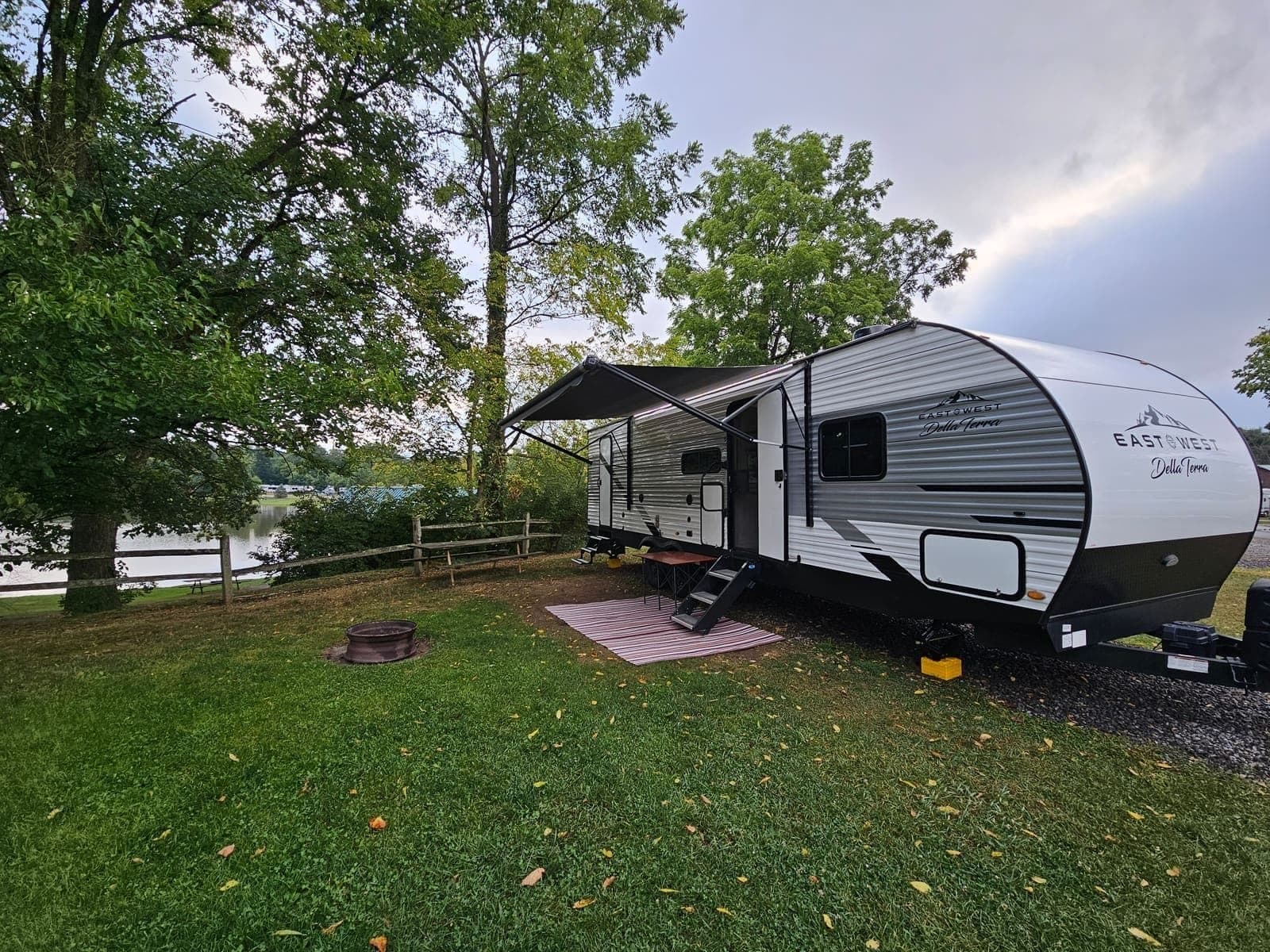
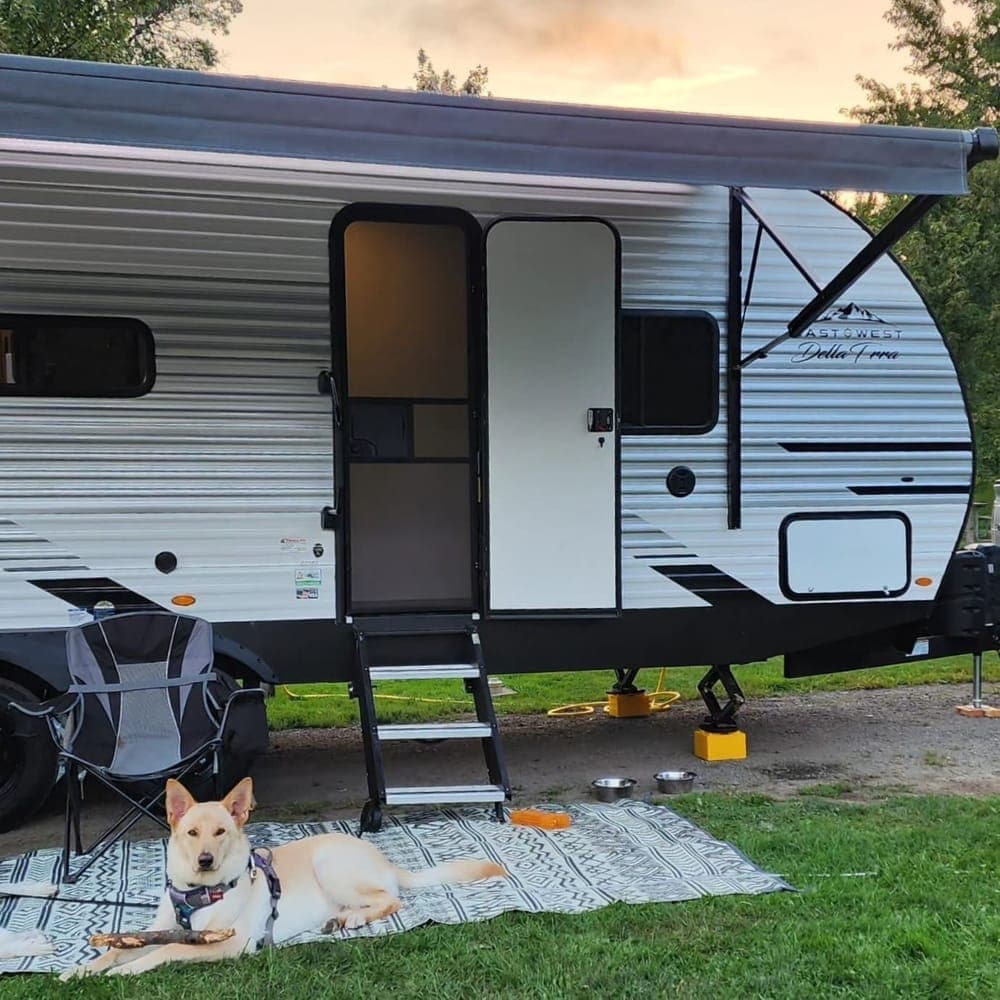
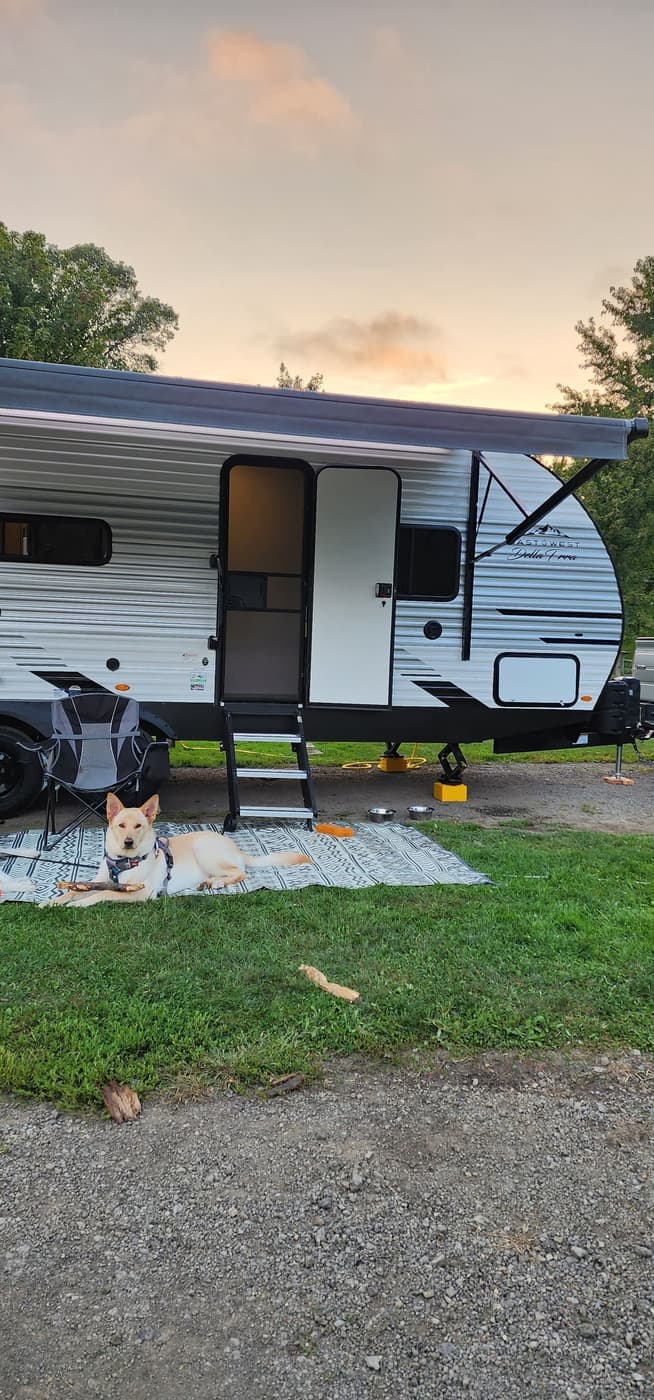
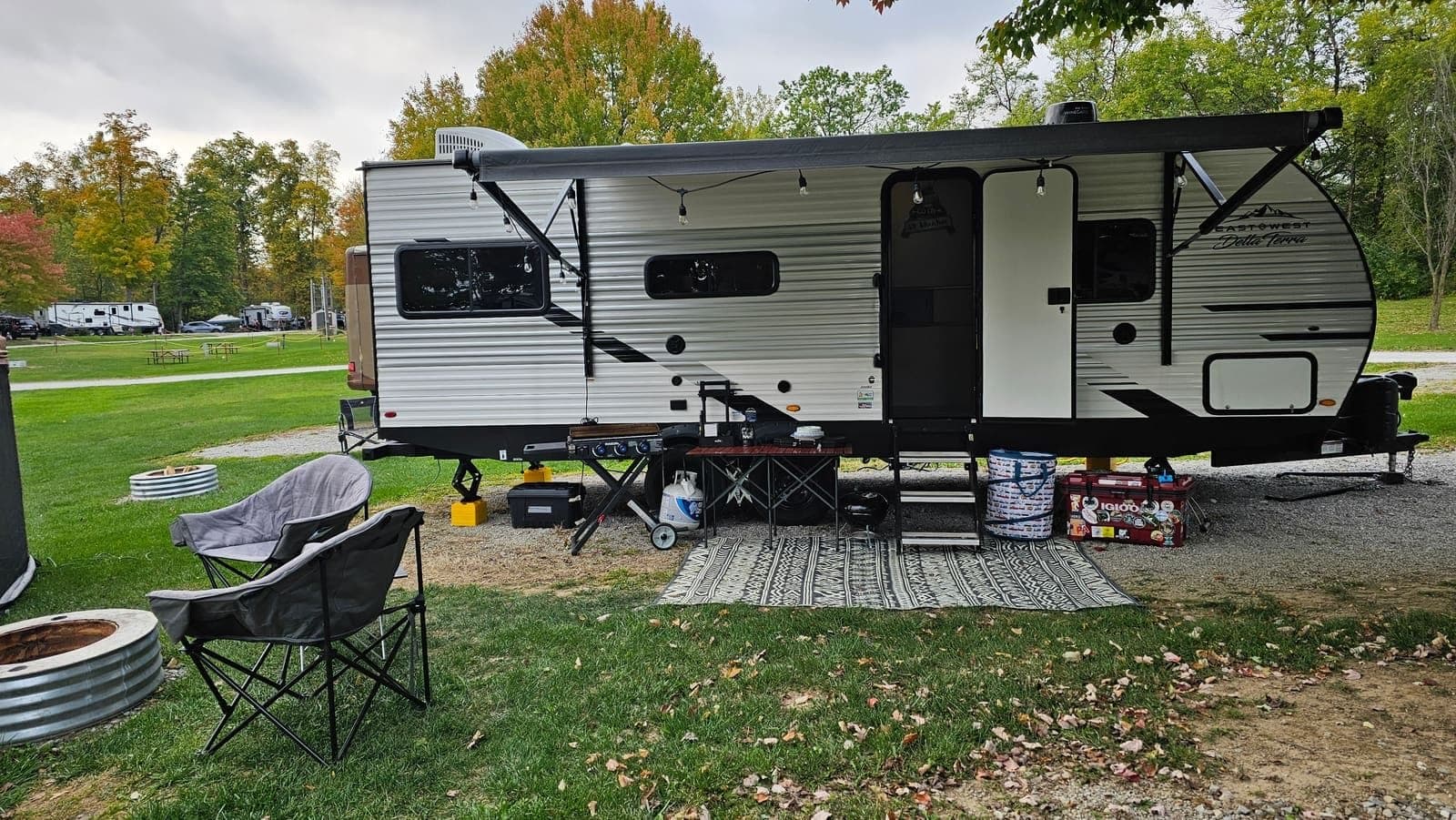
The Great Escape is a bunkhouse layout, which means a separate bunk area in addition to the main bed and the convertible dinette. It sleeps 6 comfortably and up to 10. In practice that means kids get their own space with a door between you and them, which matters more than it sounds like at 9pm.
The smaller Sweet Escape sleeps 4, up to 6, and works well for one or two kids. Beyond that you are stacking people into converted seating, which is fine for a weekend and gets old on a week.
A thing parents figure out on trip two: put the youngest in the bunk closest to the floor. Middle-of-the-night bathroom trips are a lot easier that way.
Plan for one wet afternoon
This is Ohio. Assume one rainy stretch per weekend and you will never be disappointed.
The camper is the whole rain plan, honestly. A dry, lit, air-conditioned space with a table changes a rainy afternoon from a crisis into a card game. We stock games and cards in both campers for exactly this.
Worth bringing anyway: a couple of card or board games your kids actually like, rain jackets rather than umbrellas, and one spare set of dry shoes per kid. Wet shoes are the thing that ruins the mood, not the rain.
If the forecast is genuinely bad, the indoor pools and activity barns at the resort campgrounds start looking like a very good decision.
Keeping toddlers safe around a campsite
Three hazards, in order of how often they actually cause problems:
The fire ring. Still hot for hours after it looks out. The simplest fix is a rule that the fire ring is off limits unless an adult is standing at it, applied from the first minute rather than after the first incident.
The road. Campground loops have cars, golf carts, and bikes moving slowly but constantly, and drivers do not expect a toddler to come out from between two trailers. Sites away from the main loop are worth requesting.
The hitch and stabilizers. The tongue and the stabilizer jacks are at exactly toddler head height and are made of steel. Worth pointing out on arrival.
One more: know where the bathhouse is even though the camper has a bathroom, because at some point a kid will not make it back in time.
Food that works with kids
Keep it simple and lean on the fact that the camper has a real kitchen and fridge.
- Breakfast is the meal to make easy. Eggs, or cereal, or something you can make in one pan while people wake up at different times.
- Lunch should be cold and portable, because you will likely be at the beach or on a trail. Sandwiches, fruit, whatever survives a cooler bag.
- Dinner is the campfire meal. Hot dogs and burgers earn their reputation. One night, make it something on the stove instead so you are not fighting the fire in the dark.
- Snacks matter more than any actual meal. Bring roughly twice what seems reasonable.
- S'mores are not optional. Buy the ingredients before you leave home.
The camper's fridge means you are not living out of a cooler full of meltwater by Sunday, which is a bigger quality-of-life upgrade than it sounds.
Activities that reliably land
By rough age:
Under 6: the playground, a bucket for collecting rocks and sticks, a short easy trail, and shallow water. Their bar is genuinely low.
6 to 10: bikes around the campground loop, fishing off a dock, a scavenger hunt, the pool or lake all day, and being allowed to help with the fire under supervision.
11 and up: kayaks, longer trails, and a degree of independence to go to the camp store or the beach without a parent. Bikes and kayaks are both add-ons we rent, at $20 and $40, which saves hauling your own.
Across all ages: the campfire after dark does more work than any planned activity.
The bedtime problem
In June it is still light at 9pm and your kids know it. Fighting for a normal bedtime is a losing battle.
Most families we talk to give up and let it slide an hour, then let everyone sleep in. The camper helps here in a way a tent does not, because you can actually make a bunk area dark and quiet while adults sit outside by the fire. Blackout is not perfect, but a bunk with the shades down beats a glowing tent at 9:15.
A wind-down routine that is not screen-based, and a headlamp each so nobody is scared of the dark walk to the bathroom, covers most of it.
Where we fit
You book the campsite, we bring a camper that is already made up, cooled down, and hooked up, so your arrival is unloading the car rather than an hour of setup with tired kids in tow. On Sunday you drive away and we deal with the teardown and the tanks.
The Great Escape is the one most families with two or more kids end up in. If you are deciding between campgrounds or wondering whether a specific site fits, call 330-752-8403 or reach us at wanderous.co and we will tell you what we have seen.
Frequently Asked Questions
What age is best to start camping with kids?
Families camp successfully with infants, though ages 4 and up is when kids start genuinely enjoying it rather than just tolerating it. With a delivered camper the usual barriers, setup time and sleeping arrangements, largely disappear, which makes an earlier start easier.
Which camper is better for a family of five?
The Great Escape. Its bunkhouse layout sleeps 6 comfortably and up to 10, so three kids get their own bunk area with a door between them and you. The Sweet Escape sleeps 4 to 6 and suits one or two kids better.
Are the resort campgrounds worth the extra cost with young kids?
For ages roughly 4 to 13, usually yes, because the water attractions genuinely fill a whole weekend. Under 4, most of it is off limits by height rules, so a quieter state park with a playground and shallow water gives better value.