Renting vs. Buying a Camper: The Real Math for Ohio Families
We own campers for a living, and we still talk more people out of buying one than into it.
That sounds like a sales trick. It isn't. Every spring somebody from Stow or Kent or Cuyahoga Falls walks through one of our trailers, gets that look, and says some version of "we should just buy one of these." Then we go through the real numbers together, and most of the time they don't. Not because campers aren't great — they are — but because the sticker price is the smallest number in the whole deal.
So here's the math a dealership won't tape to the windshield, in the order it tends to surprise people. Every dollar figure below is a rounded ballpark — your quotes will differ — but the shape of the problem won't.
Depreciation: the bill that never arrives
A new mid-size travel trailer lands somewhere in the low-to-mid tens of thousands of dollars. From the day you tow it home it sheds value, commonly in the range of 5 to 20-plus percent a year depending on build quality and how it's stored. In the early years that can work out to a couple thousand dollars of lost value annually. Ballpark, but not a small one.
The sneaky part is that no invoice ever arrives. The insurance company sends a bill. The storage lot sends a bill. Depreciation just quietly happens in the side yard while the trailer sits there looking like an asset. It's usually the single biggest cost of owning, and it's the one nobody budgets for, because nobody has to write the check.
Storage: your HOA and an Ohio winter both get a vote
Surprise number two shows up about a week after the purchase, when you find out where the camper is allowed to live.
Plenty of Northeast Ohio neighborhoods — Hudson and the newer developments especially — have HOA rules that flatly prohibit parking a 30-foot trailer in the driveway. Even without an HOA, a lot of driveways simply can't swallow one. So you rent a spot. Outdoor RV storage around here tends to run somewhere in the $50-to-$100-plus a month range, with covered or indoor costing more. That's several hundred to over a thousand dollars a year for the privilege of not using it.
Then there's winter, which in Akron is not a rumor. Every fall you (or a shop) winterize the water system so the pipes don't crack when January hits single digits, and every spring you de-winterize, re-seal, and check what the freeze-thaw did to the roof. Skip a step once and you're into real repair money.
The truck problem
Here's the cost that blows up the math entirely for a lot of families: the tow vehicle.
A travel trailer in the 29-to-34-foot class needs an actual truck — real towing capacity, a weight-distributing hitch, a brake controller, and a driver who's practiced backing a long box into a tight site at West Branch on a Friday evening. A minivan or small crossover isn't in the conversation.
So if the family hauler is a Honda Odyssey, "buy a camper" quietly becomes "buy a camper and a truck." Even a used, capable truck adds tens of thousands to the project, plus its own insurance and gas. At that point you're not weighing a camper against a few rental weekends anymore; you're weighing a second and third vehicle against them.
The 20-nights-a-year reality
Now the number that ties it all together. National surveys of RV owners keep landing in the same neighborhood: the average rig gets used only around 20 nights a year. Not 60. Twenty-ish, and plenty of owners come in under that.
Stack the carrying costs — depreciation, insurance (usually a few hundred a year, the cheapest line), storage, and maintenance, which a common rule of thumb pegs at a few percent of the purchase price annually — and a mid-size trailer can easily cost $3,000 to $6,000 a year just to keep. Ballpark again. But divide the middle of that range by 20 nights and you get something like $150 to $300 per night simply to own the thing. Before campground fees. Before the truck.
That's the whole argument in one division problem. Ownership costs are fixed; the nights are what you divide them by. Most families figure they'll camp 40 nights and actually camp 12, because kids have baseball, it rains, and July disappears.
You should actually buy one if…
Now the fair part, because plenty of people should own a camper, and we'd say so to your face.
Buy if most of this list is true for you:
- 30-plus nights a year. At that pace the fixed costs spread thin enough for the per-night math to work, and grab-it-on-a-whim freedom starts being worth real money.
- A proper tow vehicle already in the driveway. If a half-ton truck is earning its keep anyway, the biggest hidden cost disappears.
- You like the tinkering. Some people find resealing a roof and repacking wheel bearings relaxing. If that's you, maintenance stops being a cost and becomes a hobby with a side benefit.
- A seasonal site is the dream. Parking a trailer all summer at one campground is a different lifestyle with different — often better — math, since the trailer stops commuting.
If that list made your heart rate go up in a good way, buy the camper. Sincerely. Just count your actual nights from last summer first, not the summer you keep imagining.
And if you're a 3-to-6-weekends family
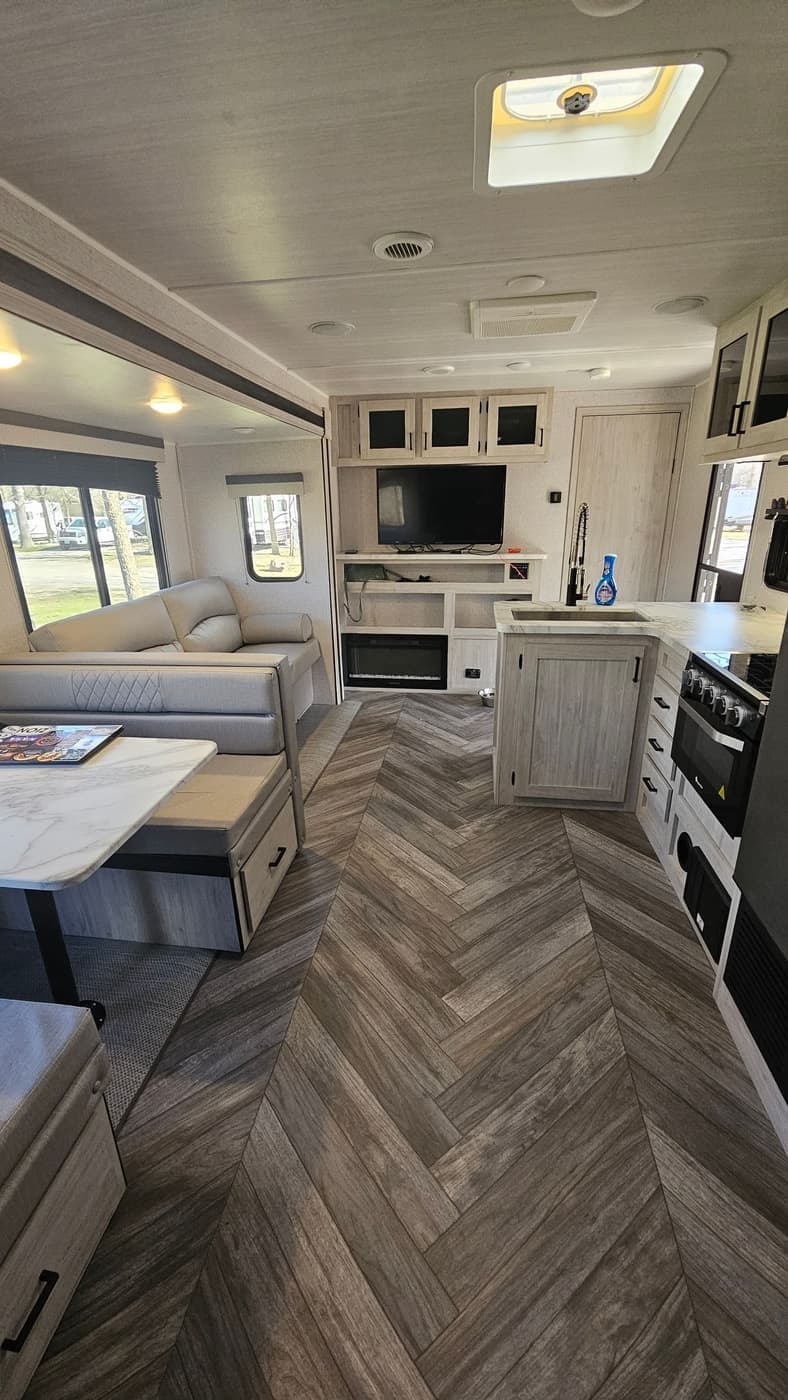
Then renting wins, and it isn't close. For reference, our two trailers rent for $115 and $150 a night, delivery within 50 miles of Stow is a flat $250, and that includes setup, teardown, and tank dumping — you never tow anything. We walked through full weekend totals line by line in what a camper rental actually costs if you want to run your own comparison.
Four or five rented weekends a season lands well under what an owned trailer costs just to sit still, and in a busy year your camping budget drops to zero instead of becoming a storage bill. If you'd like to see the campers or talk through the math for your own family — including "you camp enough, go buy one" — call us at 330-752-8403 or find us at wanderous.co.
Frequently Asked Questions
Does buying a used camper change the math?
Somewhat. Someone else already ate the steepest depreciation years, so that line shrinks. But storage, insurance, winterizing, and the tow vehicle don't care what you paid, and used trailers need a careful roof and water-damage inspection before money changes hands. The nights-per-year test still decides it.
What about a small pop-up our SUV could tow?
That solves the truck problem, and pop-ups are cheaper to store. You still winterize every fall, still need a parking spot, and canvas sides make Ohio's chilly Mays and Octobers rougher. If your realistic count is a handful of weekends, the math still leans rental.
Can we rent first to test the lifestyle before buying?
That's one of the smartest uses of a rental, and people do it every season. A weekend or two shows how your family actually uses the space, whether everyone sleeps, and whether you love campground life enough to sign up for ownership. Try both sizes before you commit to a floor plan.