Camping Without Hookups: What Boondocking Actually Takes
Without hookups you are living off three things: the fresh water tank, the battery, and the propane. Everything that makes boondocking work or fail comes down to how long those three last and where the waste goes. Plan those and a weekend off the grid is easy. Ignore them and you run out of water Saturday afternoon.
This comes up more than you would think. Festival fields, private land, a relative's back acreage, and the primitive loops at some Ohio parks all mean no hookups.
What no hookups actually means
A hooked-up campsite gives you three connections: water, electric, and sewer. Take them away and here is what changes day to day.
Water stops being unlimited. Every shower, every dish, every flush comes out of the onboard fresh tank and goes into a holding tank.
Power comes from a 12 volt battery instead of the pedestal. Lights, the water pump, the fridge control board, the furnace fan, and phone charging all run fine off it. The air conditioner does not, and that is the big one.
Waste has nowhere to go, so gray and black tanks just fill up over the trip.
Nothing else changes. The stove works, the fridge works, the furnace works, the beds are the same beds.
Water is the limit you hit first
Most people are surprised by how fast water goes, because at home it is invisible.
The biggest consumer by a wide margin is showering. A normal home shower will empty a meaningful chunk of a fresh tank on its own. The standard fix is what RVers call a navy shower: water on to get wet, water off to soap up, water back on to rinse. It feels stingy for about a day and then it feels normal.
Dishes are second. Do not rinse under running water. Wash in a basin, and if you can, use paper plates for one meal a day.
Flushing is third and is smaller than people expect, but it fills the black tank rather than the gray one, and the black tank is the one you would rather not fill early.
For a couple over two nights, water is a non-event. For a family of five over three nights with no water spigot anywhere on site, it is the thing that ends the trip. If there is a shared spigot at the site, even without a hookup, everything gets easier, because you can top up jugs.
The battery, and why the generator matters
This is where honest expectations save a trip.
A charged battery will comfortably run lights, the water pump, the furnace's fan and igniter, the fridge on propane, and your phones for a weekend. That is genuinely most of what you need.
What it will not run is the roof air conditioner. Air conditioning needs shore power or a generator, full stop. There is no clever workaround, and this is not a limitation specific to our campers.
So the decision tree is simple. Boondocking in April, May, September, or October? You almost certainly do not need a generator. Nights are cool, the furnace runs on propane with only the fan drawing power, and you will be fine. Boondocking in July? Get the generator, or accept that the camper will be as hot inside as it is outside.
Our generator add-on is $70 for the rental. It will run the air conditioner and recharge the battery. It is not silent, and many campgrounds and festivals restrict generator hours, so check the rules wherever you are going. You can see it alongside the other add-ons.
Propane does more than you think
Propane runs the furnace, the stove, the water heater, and the fridge when it is not on electric. The tanks hold plenty for a weekend, and this is the one resource you are unlikely to run short on.
Worth knowing: the furnace uses propane for heat but battery for the fan. So on a cold night off grid you are drawing down the battery every time the furnace cycles. That is usually fine for a weekend and is a reason not to run the furnace at 72 degrees all night.
Where the waste goes
Gray and black tanks fill and stay full until they are dumped. You do not deal with that part. We handle dumping when we pick the camper up, which removes the single least pleasant job in RV camping.
What you do need to do is not fill them faster than the trip allows. That is the same water discipline from earlier, plus one rule that matters more without hookups: RV-safe toilet paper only, and nothing else in the toilet. We stock the right paper. Wipes, even the ones labeled flushable, cause genuine problems in a holding tank.
The fridge
The fridge runs on propane when there is no shore power, which is what makes long off-grid stays possible. Two practical notes: it works best when the camper is close to level, and it takes several hours to get cold. We run it before delivery so it is already cold when you arrive.
Leveling on unimproved ground
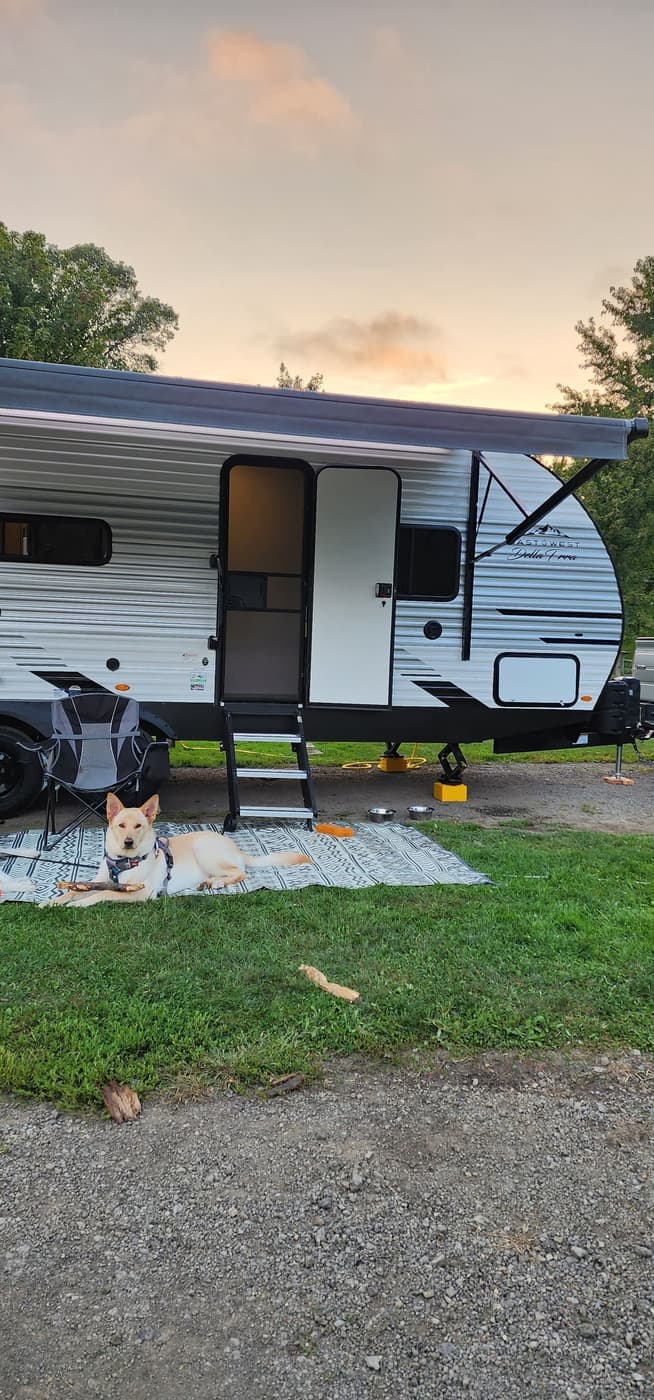
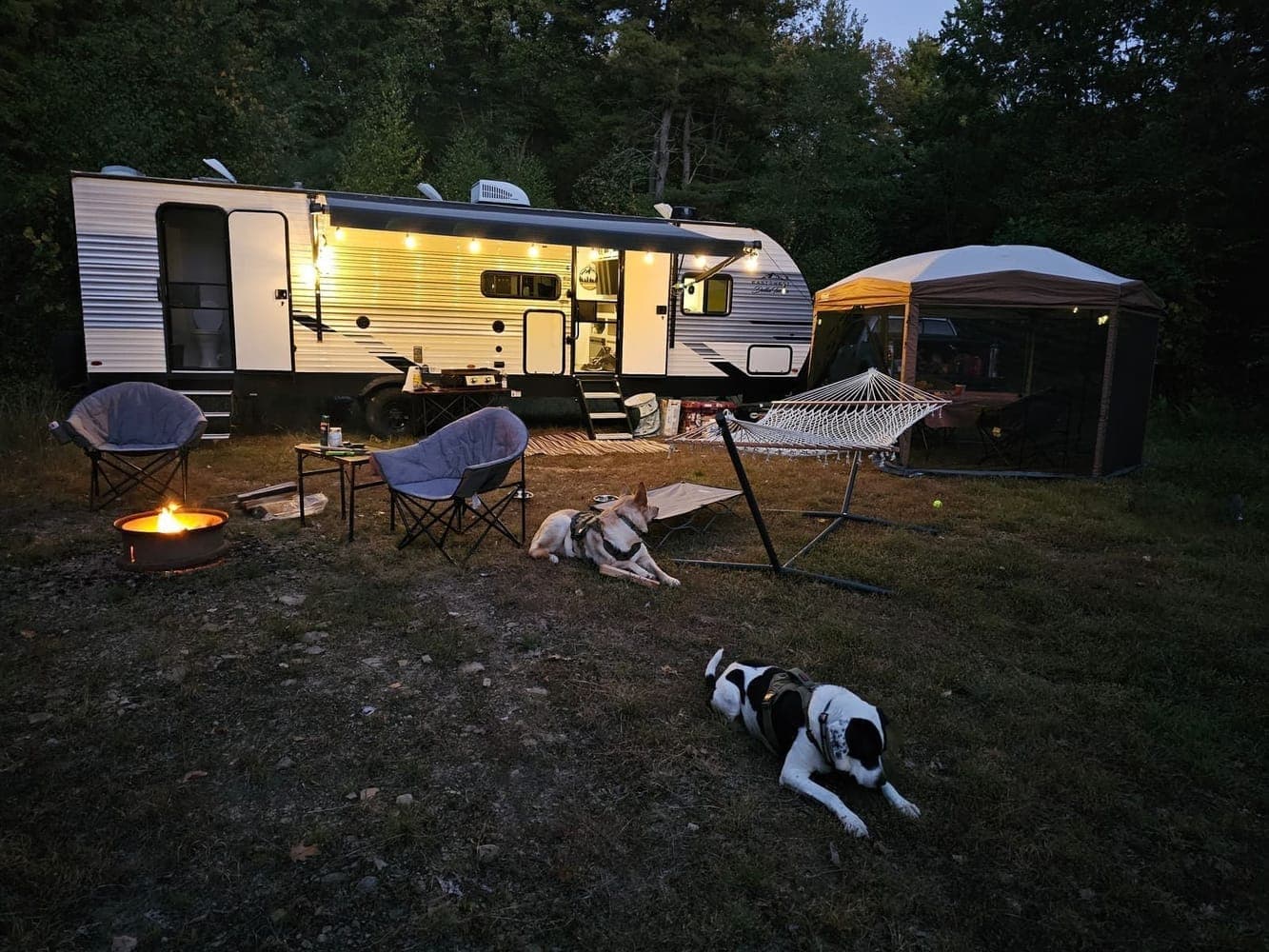
A developed campsite has a pad. A field does not. We carry blocks and can level on most surfaces, but soft ground after heavy rain is a genuine limitation, both for leveling and for getting a truck and trailer in and back out.
If you are putting a camper on grass or dirt and the week has been wet, tell us in advance. Sometimes the answer is a different spot twenty feet away on firmer ground.
When boondocking is the wrong call
We would rather talk you out of a bad trip than sell you one.
- A hot July weekend with kids and no generator. The camper will be uncomfortable and nobody will sleep.
- Anyone who wants a real shower daily. Book a site with hookups.
- Long stays. Past about three nights without a way to refill water, the math stops working for most groups.
- Very soft ground. Not worth risking a stuck truck.
When it is right, it is genuinely great: quieter, more private, and often somewhere you could not otherwise camp at all. Just go in knowing which three things you are budgeting.
Booking a no-hookup trip
Tell us up front that the site has no hookups, because it changes what we do before delivery. We fill the fresh tank, get the fridge cold, and make sure the battery is topped off. If you want the generator, add it when you book.
If you are not sure whether a site has hookups, our campsite guide covers how to read a listing. Call 330-752-8403 or reach us at wanderous.co and we will help you work out what the site can actually support.
Frequently Asked Questions
Can I run the air conditioner without a hookup?
Not on battery alone. The roof air conditioner needs shore power or a generator, which is why the $70 generator add-on is the deciding factor for summer trips off grid. Lights, the water pump, the fridge, and the furnace all run fine on battery.
How long will the fresh water tank last?
It depends entirely on showers. Two people taking short showers can go a comfortable weekend. A family of five taking normal-length showers can empty it in a day and a half. If there is a shared spigot on site you can top up jugs and stretch it much further.
Do I have to empty the tanks myself?
No. We dump both the gray and black tanks when we pick the camper up, so you never handle a sewer hose. Your only job is not filling them faster than the trip allows, and using the RV-safe toilet paper we stock.