How to Choose a Campsite for a Delivered Camper
Three things decide whether a campsite works for a delivered trailer: the site's length limit, what hookups it has, and whether a truck can physically get the trailer into it. Check those before you reserve and the rest of your weekend takes care of itself. Get one wrong and you find out on Friday afternoon, which is the worst possible time.
You book the campsite yourself, so this one is genuinely on you. Here's how to read a listing properly.
Start with the length limit
Every reservation system lists a maximum length per site. Compare it against the camper you want, and give yourself margin.
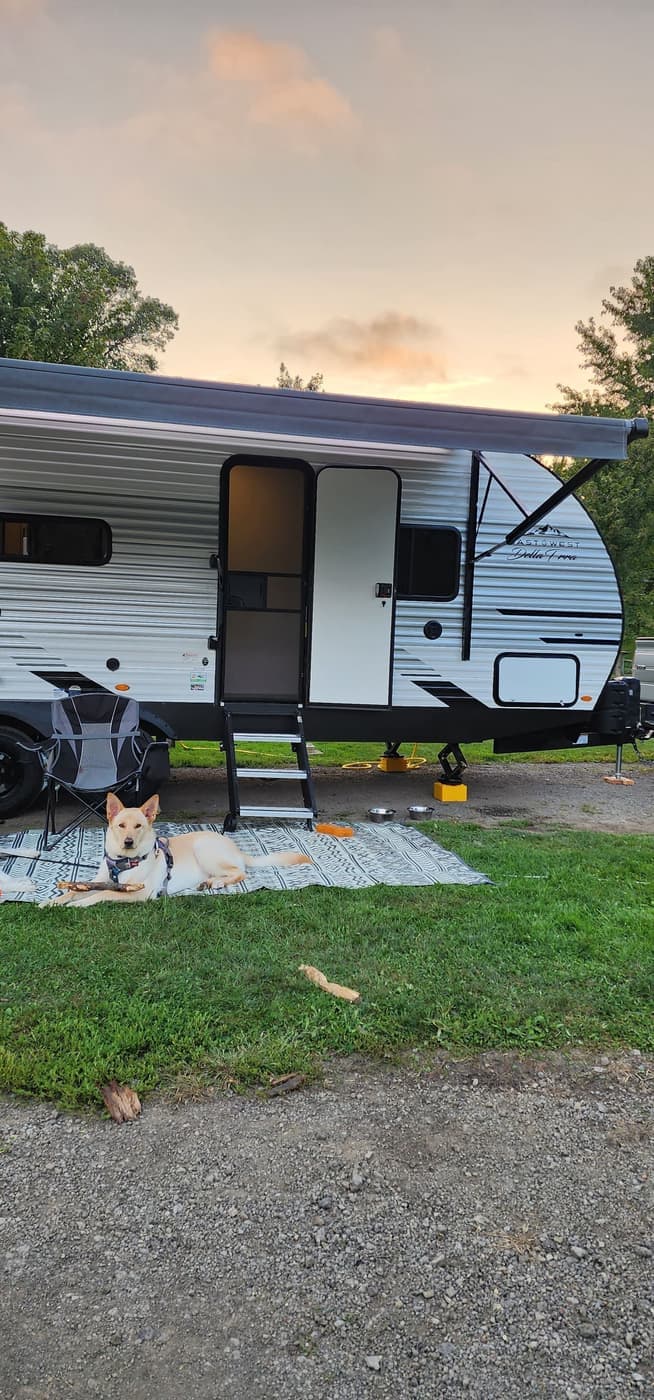
Our two trailers are 34 feet 4 inches and 29 feet. Those are the box lengths, not the space needed. A site advertised at exactly 30 feet is not a fit for the 34-footer, and it's tight for the 29-footer once you account for the tongue and hitch hanging off the front.
A reasonable rule: look for a site rated at least 5 feet longer than the trailer. So 40 feet or more for The Great Escape, 35 feet or more for The Sweet Escape. If the only site left is exactly at the limit, book the smaller camper instead of gambling.
Some campgrounds list the pad length and some list the total site depth including the parking spur. Those are different numbers. If the listing doesn't make it obvious which one you're looking at, call and ask.
Know what your hookups actually are
Sites come in three flavors, and each changes the trip.
Full hookups mean water, electric, and sewer at the site. This is the easy mode. You can run the AC, take normal showers, and never think about tank capacity.
Electric only is the most common at Ohio state parks. You get power, which is the important one, but water comes from a shared spigot and there's no sewer connection. We fill the fresh water tank before delivery, so you'll have water. You just have a finite amount of it, and the gray and black tanks fill as you use it. For a weekend with two people this is a non-issue. For five people over four days, plan shorter showers.
Primitive or no hookups means no power at all. The furnace, lights, and water pump run off the battery, but the air conditioner does not. In July that's a real problem, and it's the case where our generator add-on stops being optional. There's more on that in our guide to camping without hookups.
One more detail worth checking: whether the electric is 30 amp or 50 amp. Both work. On 30 amp you just can't run everything at once, so the air conditioner plus a microwave plus a hair dryer will trip the breaker. It resets easily, but it's nice to know before it happens at 7am.
Can a truck actually get in there?
This is the part people never think about, and it's the one that causes real trouble.
Back-in vs. pull-through. Pull-throughs are easier and usually cost a little more. Back-in sites are fine, we do them constantly, but a back-in with a sharp approach angle and trees on both sides takes time and occasionally doesn't work at all.
The road in. Older campgrounds have narrow loops with tight turns that were laid out when trailers were 18 feet long. If a campground map shows a hairpin between the entrance and your site, mention it to us.
Low branches. Our trailers are around 11 feet tall with the AC unit on the roof. A canopy that a car drives under happily can be a problem. Heavily wooded state park loops are the usual suspects.
Surface. Gravel and paved pads are reliable. Grass sites are lovely in July and a genuine risk after three days of rain, because a truck and a loaded trailer can sink. If your site is grass and the forecast is bad, tell us in advance.
Slope and levelness
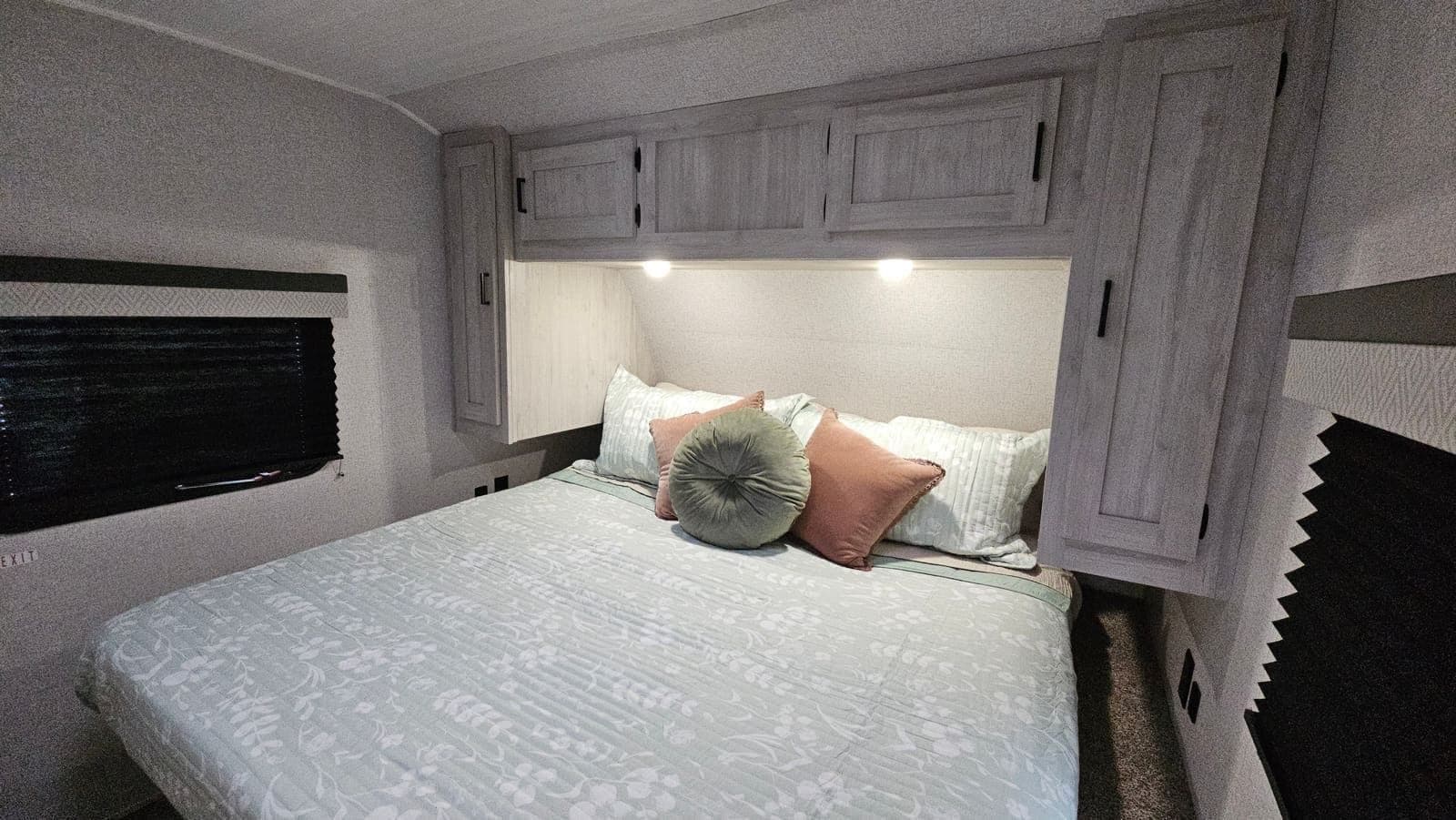
We carry blocks and can level a trailer on most sites. There's a limit, though. A site with a serious side-to-side tilt eats through the leveling range fast, and a camper that isn't level means you roll toward one side of the bed all night. The absorption fridge also works best on level ground.
If a site listing or a review mentions the pad being noticeably sloped, pick a different one. You don't need to measure anything. Photos in campground reviews usually make it obvious.
Where things sit on the site
A few small things that make a weekend better:
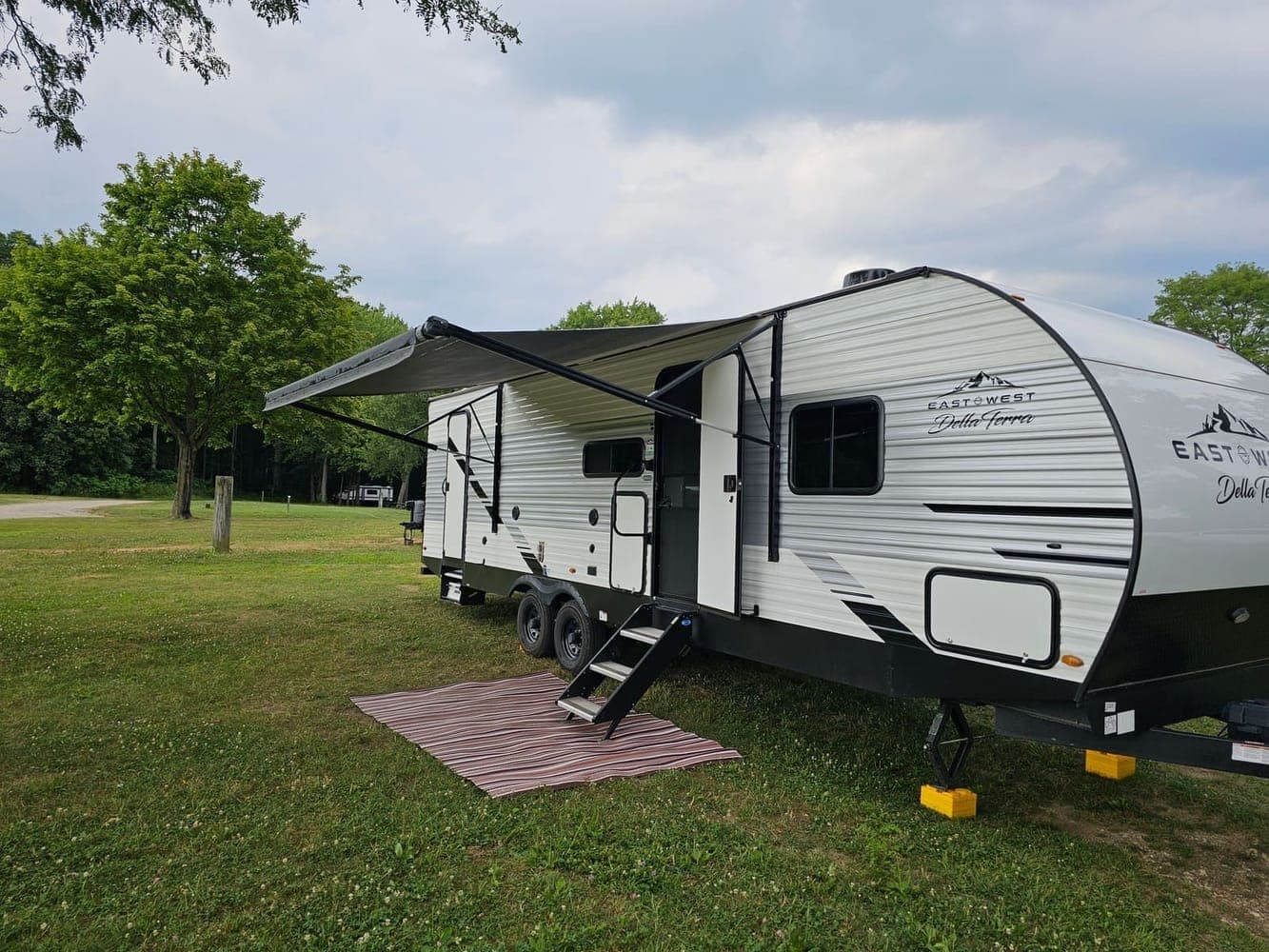
- Awning side. Our awnings extend from the door side. You want open space on that side, not a tree trunk or the neighbor's fire ring six feet away.
- Picnic table and fire ring. Ideally they're on the awning side, so your outdoor space is one area instead of two.
- Water spigot. On electric-only sites it's shared. A site right next to one is convenient. A site 200 feet away means hauling water.
- Shade. In an Ohio August, an all-day-sun site works the AC hard. Afternoon shade is worth more than morning shade.
Distance to the bathhouse matters less than you think
With a tent, you pick your site around the bathhouse. With a camper you have your own bathroom, so this drops way down the priority list. Being near the bathhouse usually means more foot traffic past your site at all hours.
The exception is a family with kids who are still learning, where a shower house within sight is worth the extra traffic. Otherwise, take the quieter site.
Five questions for the campground office
If a listing is vague, one short phone call settles everything:
- What's the actual usable length of site number ___?
- Is it back-in or pull-through, and how tight is the approach?
- Is the electric 30 amp or 50 amp, and is there water and sewer at the site?
- Is the pad gravel, paved, or grass, and is it fairly level?
- Do you have a gate code, quiet-hours rule, or escort requirement for a delivery vehicle dropping a trailer?
That last one matters more than people expect. Some campgrounds want deliveries during office hours only, and a few require someone to lead the truck in.
Mistakes that cause a last-minute scramble
- Booking a site at exactly the trailer's length with no margin.
- Assuming "hookups" means full hookups. Read which ones.
- Reserving a primitive site for a July weekend without a generator.
- Not passing along a gate code, so the truck arrives and can't get in.
- Booking a grass site in a wet spring week.
- Picking the site by the photo without checking the length limit at all.
None of these are disasters if we know early. All of them are a problem if we find out at the gate.
Send us the site before you book
If you're unsure, tell us the campground and the site number and we'll tell you straight whether it works, whether the smaller camper is the safer pick, and what the setup looks like. It costs you a text and it's a lot cheaper than moving a reservation.
Once you're booked, the rest is ours. We tow it, back it in, level it, hook it up, and come get it when you're done. There's more on how that works on our delivery page, and you can compare the two trailers on the campers page. Questions about a specific site, call 330-752-8403 or reach us through wanderous.co.
Frequently Asked Questions
What size campsite do I need for your campers?
Look for a site rated at least 5 feet longer than the trailer. That means 40 feet or more for the 34-foot Great Escape, and 35 feet or more for the 29-foot Sweet Escape. The extra margin covers the tongue and hitch and gives room to maneuver.
Can you deliver to a site with no electric hookup?
Yes, though the air conditioner will not run without power. Lights, the water pump, and the propane furnace all work off the battery. For a summer trip on a primitive site, add the generator so you can actually cool the camper down.
What if I book a site and it turns out to be too small?
Tell us as soon as you know. Most campgrounds will move a reservation if there is availability, and it is far easier to sort out midweek than on arrival day. Send us the campground and site number before booking and we will check it for you.